Thanks Chris and Joy for this report. Chris wrote that getting to see polar bears before they became extinct was on his bucket list and his report on what was a fantastic trip might mean the trip is now on the bucket list of many.
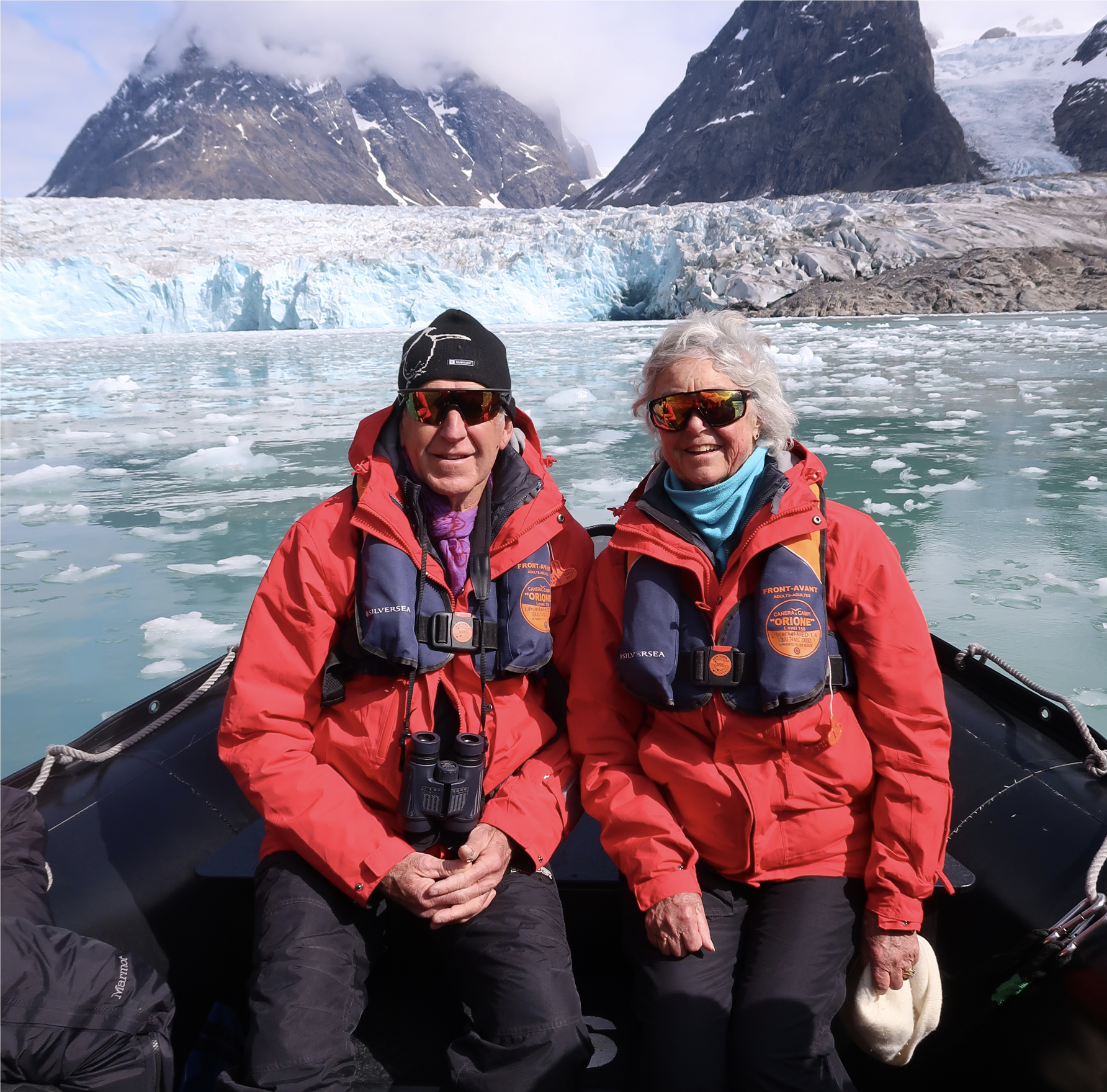
Chris and Joy smiling as they had just solved the problem go getting enough ice for their gin and tonic.
The term “Arctic” refers to the polar region at the most northern part of the Earth. Land within it has seasonally varying ice and snow cover, predominantly treeless permafrost under the tundra, and is the southernmost limit of the midnight sun and polar night, and has July temperatures below 10 degrees Celsius.The trip we chose took us for 2 weeks to the Canadian Arctic, mainly Baffin Island and the Hudson Strait, ending with a few days in Greenland. We were a little surprised by the lack of wildlife and sea life. However, there was an abundance of bird life, with massive colonies of guillemots and kittiwakes.
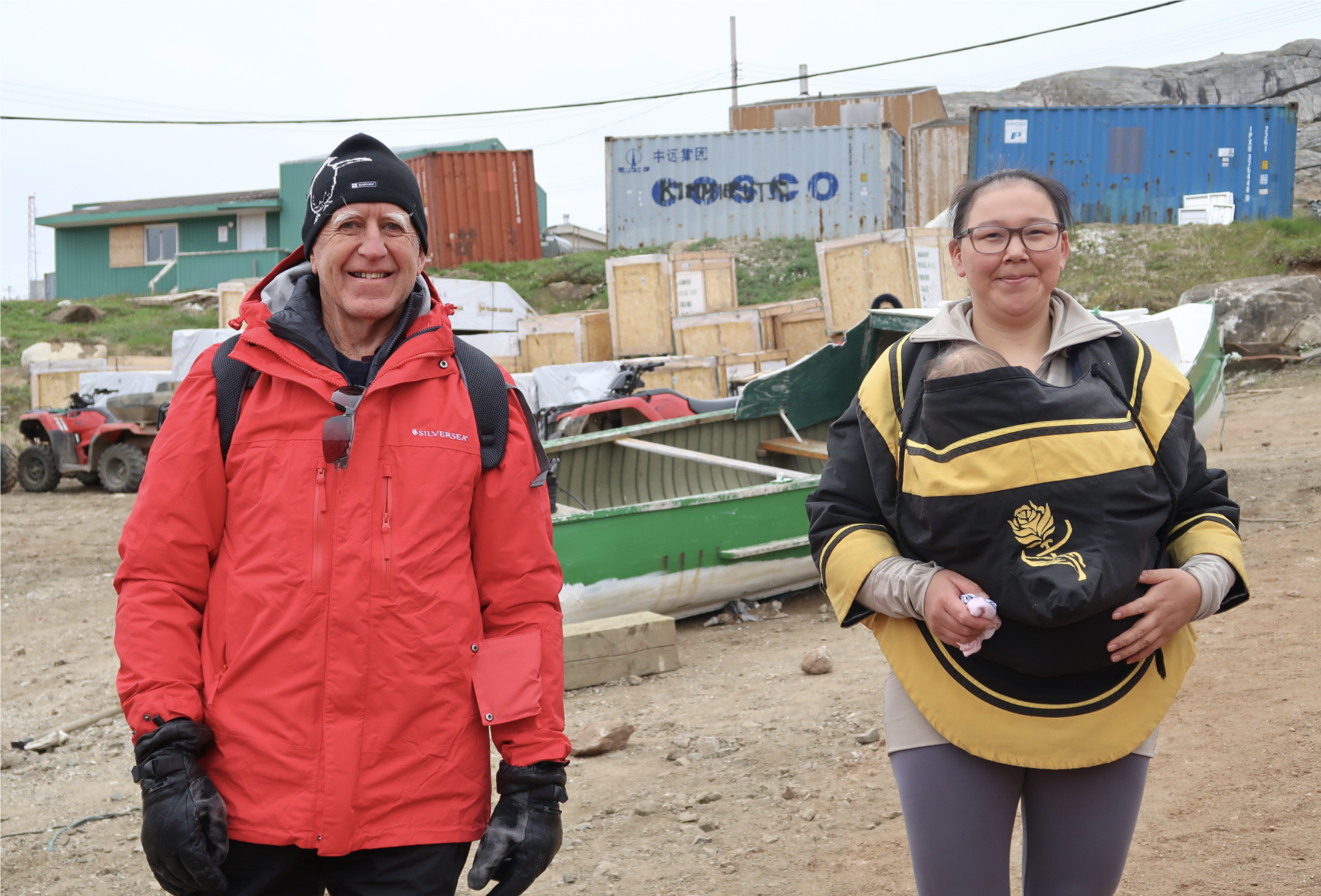
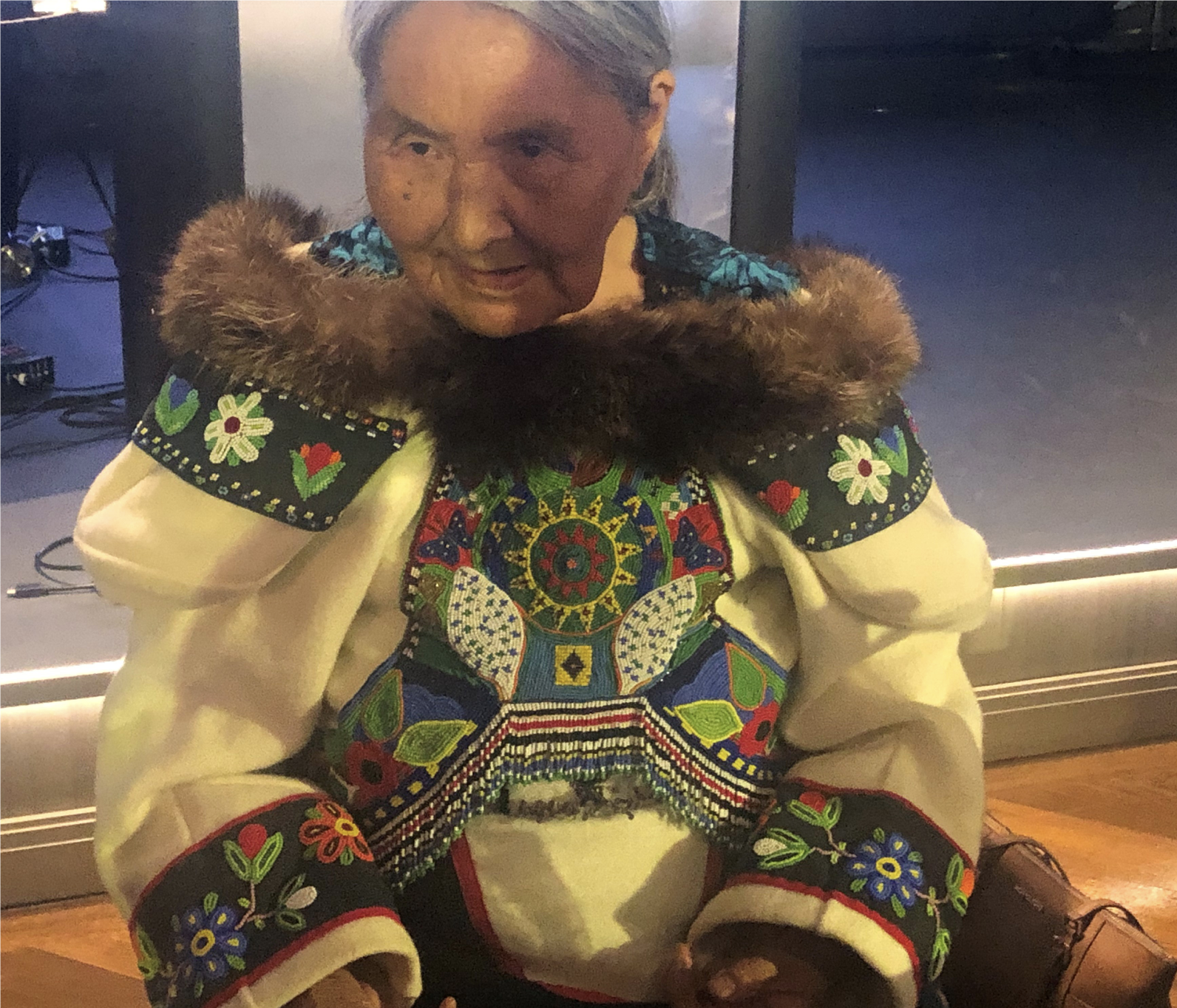
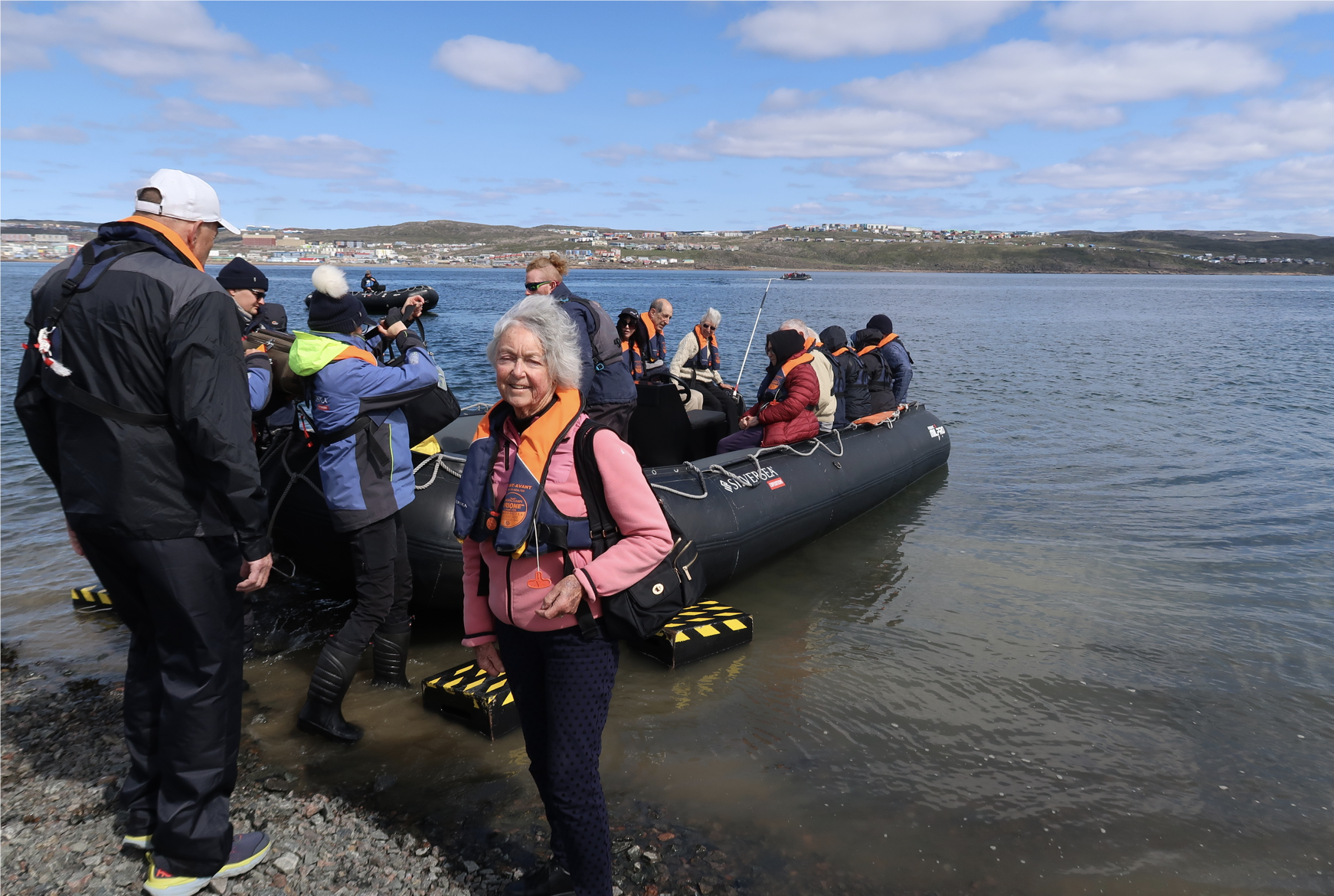
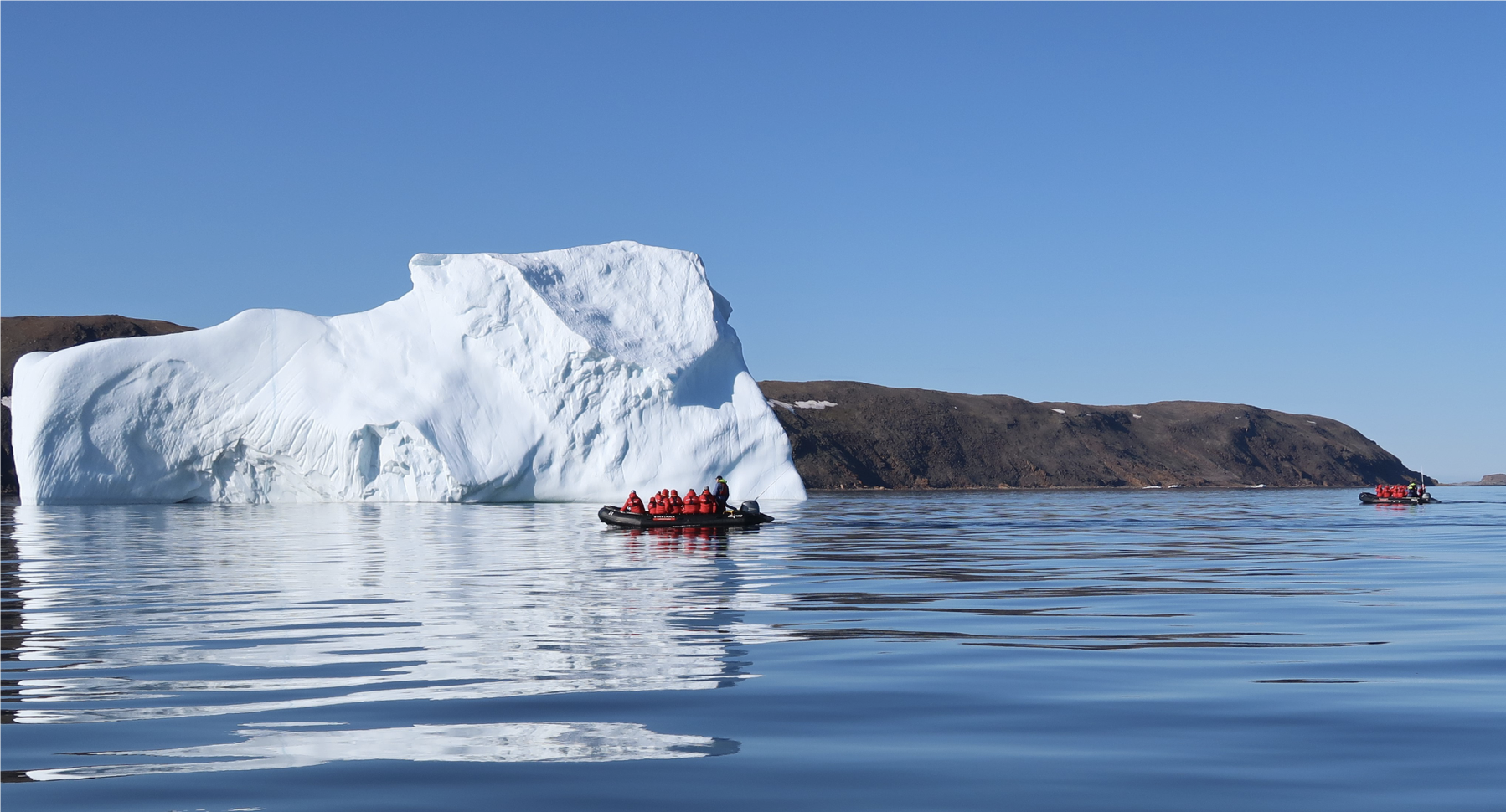 The highlights of the expedition were the excursions in zodiacs, which took place usually twice a day. Two kayak outings were special as we had perfect conditions to appreciate the serenity of our surroundings. We were also fortunate to visit several Inuit communities. It was interesting to communicate with these locals who live in traditional subsistence communities in very inhospitable environments. The communities have access to modern technologies like cellphones and internet, but choose to live like their ancestors had. Fishing and hunting for caribou, seals and whales provide them dietary requirements and skins for clothing. One had a thriving art industry. Other supplies arrive by small planes and ships when they can get in during summer.
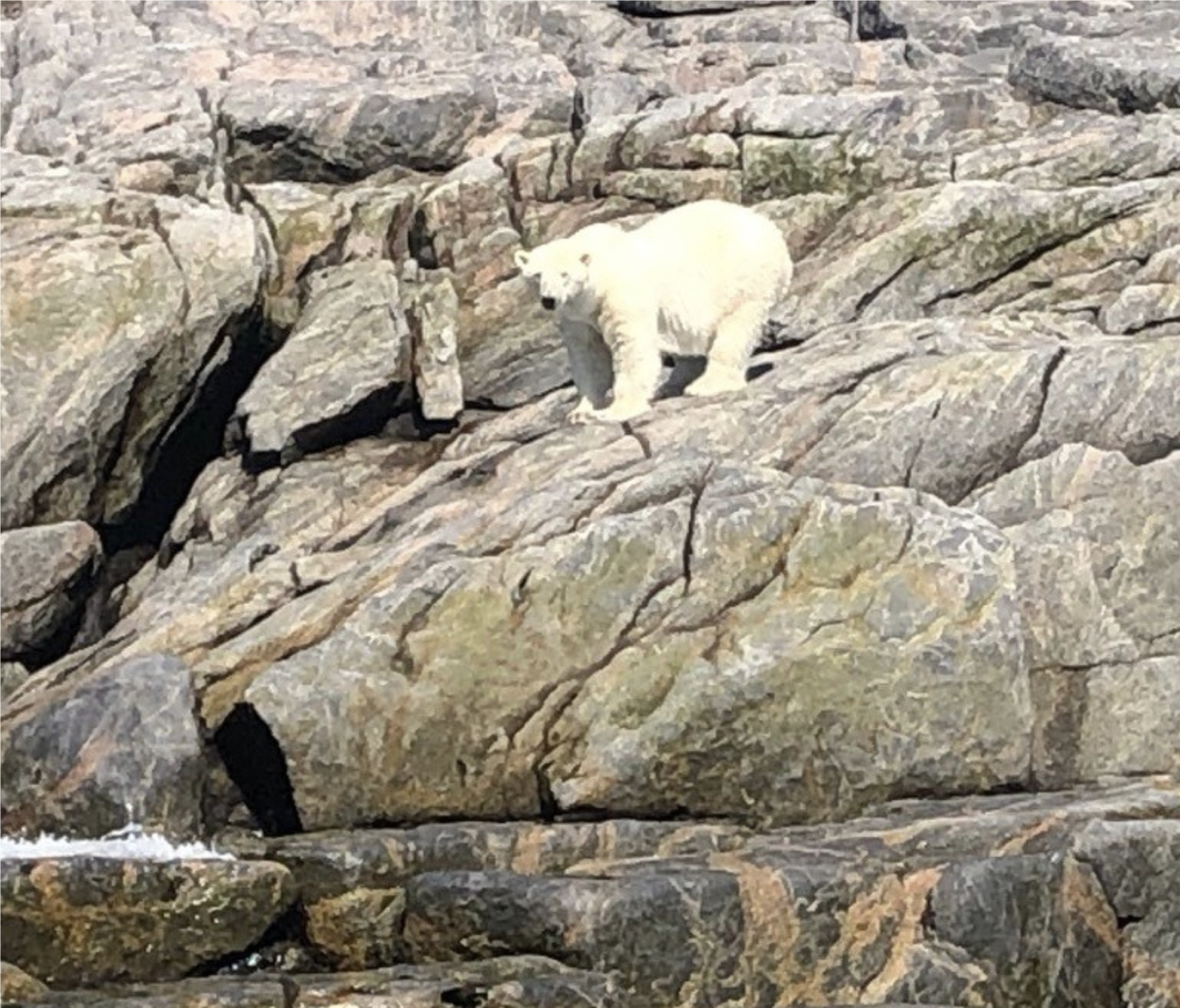 The landscape of the Canadian Artic is very barren, being several hundred kilometers north of the tree line. There was no vegetation at all.
We saw several polar bears, mostly small dots in the distance visible through telescopes and binoculars. Then we were lucky to see one young male polar bear very close up as he came over a rise on his barren island and came towards the foreshore. Zodiac trips got us quite close to him. Polar bears come south on ice floes when the sea ice breaks up after winter. They are unique in that they do not hibernate over winter, but hunt and eat seals to gain weight to get them through the lean times of summer.
Greenland was a fascinating place to visit. The capital, Nuuk, was more civilized than where we had been in northern Canada. Greenland is part of Denmark and derives most of its income from the fishing industry. The last destination was above the Arctic Circle in Kangerlussuaq. We were taken on a bus tour up to the ice cap, which covers 80% of the country. The ice cap is up to 3km thick and by the time it reaches the face of some glaciers is 25,000 years old. Our trip ended with a flight from the international airport at Kangerlussuaq back to Montreal. This airport had been built by the American Armed Services during World War 2.